

New to Utah? Here's the Difference Between a Ward Building, a Stake Center, and a Temple (and What a Temple Does to Your Home Value)
By Franco Preston — Lehi local, former educator, Realtor with Olympus Real Estate
I've had this conversation in the car more times than I can count. We're driving through a neighborhood, a passenger points out the window and says, "Is that a temple?" And I say, "Nope, that's a ward building." Ten minutes later: "Okay, that one's a temple." Nope. Stake center.
If you're moving here from somewhere else, nobody explains this to you. The buildings look vaguely similar from the road, there are a lot of them, and the people who grew up here forget that it isn't obvious. So here's the plain-English version I give clients, plus the part everybody actually wants to know: what happens to your property value when you live next to a temple.
Quick note before we start. I'm not here to sell you on anything religious. I'm a real estate guy. You're going to see these buildings every day in Utah, and knowing what they are makes you a smarter buyer.
The ward building (meetinghouse)
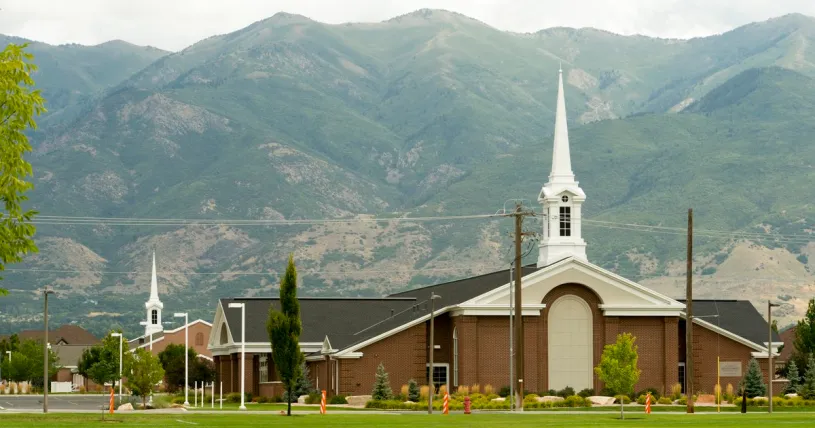
This is the one you'll see most. Brick or stucco, a steeple with no statue on top, a big parking lot, usually a lawn and sometimes a basketball hoop visible through the windows. In Lehi you can pretty much throw a rock in any direction and hit one.
A "ward" is a local congregation of The Church of Jesus Christ of Latter-day Saints, and it's organized by geography. Your address determines which ward you're in, whether you attend or not. That's why you'll hear neighbors say "she's in my ward" the way people elsewhere say "she's in my HOA."
The ward building is where Sunday services happen. It's also where the weeknight stuff happens: youth activities, scouting-type programs, funerals, wedding receptions, the occasional pickup basketball game. Anyone can walk in. There's no membership check at the door.
Real estate translation: a ward building is a normal neighborhood amenity. Expect Sunday morning traffic, cars along the street for a couple hours, and weeknight activity. Otherwise it's a quiet, well-kept neighbor with a big lawn somebody else mows.
The stake center (Looks just like a regular ward building... because it is. But these often have more parking to accomodate more people.)
A "stake" is a group of wards, usually somewhere between five and a dozen, covering a bigger area. Think of it like a school district: the ward is the school, the stake is the district.
A stake center is just a larger meetinghouse. It hosts its own wards on Sunday plus the bigger gatherings that pull from the whole stake, so it's built with a larger chapel and more overflow space. From the outside, the giveaway is size. Bigger building, bigger parking lot, sometimes a taller steeple. Still no statue on top.
Real estate translation: same as a ward building, with a little more traffic on the weekends when the whole stake shows up. If you're touring a house next to one, ask the seller how often the lot fills up. Most of the time the answer is "a few Sundays a year."
The temple
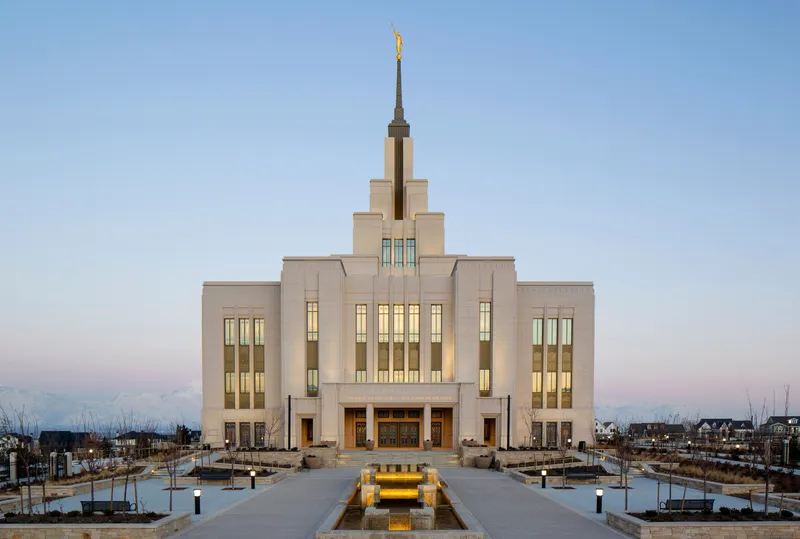
This is the one people actually mean when they ask, "Is that a temple?"
Temples are rare. Utah has 32 right now; there are thousands of ward buildings. They're built to be seen: white or light-colored stone, dramatic lighting at night, formal landscaping, and usually a gold statue of an angel on the tallest spire. You will not mistake the Mount Timpanogos Temple in American Fork or the temple in Saratoga Springs for a ward building. When Lehi's temple is lit up at night, you can see it from half the city.
Here's the big difference: temples aren't for Sunday church. Regular worship happens at the ward building. Temples are reserved for specific ceremonies, and once a temple is dedicated, only members who meet certain standards go inside. The exception is the open house before a temple is dedicated, when the public is invited to walk through. If you ever get the chance, take it. It's the only time you'll see the inside.
Real estate translation: a temple is a landmark, not a neighbor who throws parties. No Sunday crowds. Beautiful grounds that are maintained better than most city parks. But it's lit up at night, it draws visitors, and the roads around it get busier. Which brings us to the money question.
Does living near a temple raise your home value?
If you ask around, you'll hear the folklore: homes near a temple go up 10, 15, 20 percent. I've heard agents say it like it's a law of physics.
I went looking for the actual data, because I'd rather lead, guide, and protect you than repeat something that sounds good.
The best recent look at this comes from a data scientist who analyzed 42 U.S. temples announced since 2011 against 15 years of Zillow data. On the surface, the home values in those zip codes did outperform the national average by about 22 percent. Sounds like the folklore is right.
But here's the catch. Before the temples were ever announced, those zip codes were already wealthier, more educated, and far more populated than average. Those are the things that predict appreciation. When you control for them, the "temple effect" mostly disappears. In heavily Latter-day Saint areas like Utah, there's a slight positive lean, maybe 3 to 5 percent, but it's not big enough to be statistically certain. The 10 to 20 percent number is a myth.
That said, there's a second story the studies don't fully capture, and it's one I've watched play out in real life: the land.
When the Draper temple was announced years ago, lots around the site sold before construction even started, and developers who guessed the location early did very well. The same thing happened around South Jordan and Bountiful. The pop shows up in raw land and new lots at announcement time, not in your existing house five years later. By the time the temple is finished, that premium is usually already baked into the price you paid.
So here's my honest take:
If you already own near a planned temple: Good news, but don't plan your retirement around it. The neighborhood will get nicer, the grounds will be gorgeous, and buyers who want that view will pay for it. Expect a nudge, not a windfall.
If you're buying near a temple: You are paying for the location today. Make sure you actually want it. The view and the grounds are real benefits. So are the nighttime lighting, the tour buses on dedication weekends, and the traffic on big days. I've had clients who loved it and one who moved after two years because the spire lit up her bedroom.
If you're buying near a ward building or stake center: Relax. It's a church. It's a good neighbor. It doesn't move the price much either direction.
The bottom line
Ward building: your neighborhood congregation, open to anyone, Sunday traffic. Stake center: a bigger version that hosts several wards. Temple: the landmark with the statue, not used for Sunday services, closed to the public after dedication.
And on value: a temple is more of a sign that a neighborhood was already headed in a good direction than a magic wand that makes it go there. Buy the house because you like the house, the street, and the commute. If it happens to have a temple view, enjoy it.
If you're relocating to Lehi or anywhere in Utah County and want somebody to explain the stuff nobody else explains, reach out. I've lived here 15 years, I've never missed the Roundup Rodeo, and I'm easy to talk to and hard to offend.
Sources: KUER / Mormon Metrics temple-premium analysis (Jan 2026); Deseret News on Draper land values.
Categories
Recent Posts



GET MORE INFORMATION